How to Cook Over a Campfire

WOLF-college-salmon-fry

It’s hard to think of anything that embodies the spirit of the great outdoors more than a good old-fashioned campfire under the stars. They provide us with warmth, light, and a great social atmosphere. There’s something deeply human about huddling around a raging fire with friends and family that brings us all closer together. Great food is one of the other few things in this world with the same power to rally us together and lift our spirits. Put them together and you have a guaranteed recipe for success. With a few basic tips, cooking over a campfire can be . . . → Read More: How to Cook Over a Campfire

How to Cook for Backpacking Trips

Instructor-Charlie-Borrowman-backpacking-in-wolf-country.jpg

When most of us think of backpacking, we think of majestic mountains, lush forests, and birds singing over babbling streams, while the fresh smells of nature delight our senses.  Not every image invoked is so pleasant, however.  Many of us think of the lamentable prospect of hiking all day long, just to sit down to a freeze-dried package of what, we can only hope, was chicken at some point, served with bland white rice or beans. Luckily, this doesn’t have to be so!  With a few simple tricks, we can turn the nightly “UGH!” into a resounding “Awwww yeah!” and . . . → Read More: How to Cook for Backpacking Trips

Top Native Plants To Learn for Herbal Medicine: Part 1 of 2

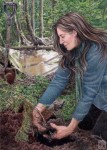
Rachel Edwards with Yarrow

The following plants which are native to the Pacific Northwest either 1) are scientifically proven to effectively treat health issues, or 2) I have personally tested to work.  However, many of them should only be used under the care and advice of a naturopathic physician.  Please seek medical advice and never rely on internet advice to treat problems.

Plant Properties You Need To Learn from Botany in a Day

This article is designed to help the beginner cut out the chaff, and start studying the plants that will give a solid foundation of knowledge. But it’s not even the whole plant . . . → Read More: Top Native Plants To Learn for Herbal Medicine: Part 1 of 2

The Tenets of Herbal Medicine: Guidelines & Rules for Health, Safety & Success

WJECCArtBook2

I was hurriedly descending the lowest slopes of Mt. Baker, through a giant old-growth forest, trying to reach the road before nightfall. My ride was waiting there, and I could see my friend in her car, just below me through a break in the trees. The trail continued at a gradual angle 1/4 mile sideways before switching-back to the parking area.

I was young, so even though going off-trail would create erosion, my young mind thought that cutting downslope was an acceptable choice since someone was waiting for me. Wrong. In the dim light, I scrambled over fallen trees and . . . → Read More: The Tenets of Herbal Medicine: Guidelines & Rules for Health, Safety & Success

Who’s Afraid of the Big, Bad Wisconsin Wolf?

Detail of Wolf Artwork in Justice by Joanna Colbert

Article written by Dr. Thomas P. Chisholm, Col., USA, Ret.

Identifying tracks of wild animals is easiest in new snow when the temperature is moderate on a sunny day. March is often the best month when the snow is deep and the weather is warmer. Tracking on skis is pleasant but snowshoes are best when the brush is thick under the trees and the balsams are dense. Both are good exercise, burn calories rapidly and the thrill of identifying a bobcat or a fox is an adventure.

Finding the large prints of an elusive wolf that end with at the . . . → Read More: Who’s Afraid of the Big, Bad Wisconsin Wolf?

Good-Bye Debris Hut, Hello to the Best Emergency Wilderness Survival Sheltering System: The Wolf College BIVOUAC BED & EAGLE’S NEST plus bivy bag recommendations

Wolf College founder Chris Chisholm demonstrating how to get out of the wind, away from the water, and up off cold ground in order to bivouac during a cold emergency survival situation.

Since the founding of the Boy Scouts and to the era of modern of survival schools, the “debris hut” has enjoyed great popularity.  Unfortunately, the debris hut is not a practical design for emergency shelter. 

To build a debris hut, you need 1) plenty of time, which no one in a survival situation has, 2) a mind sharp enough to employ woodcraft knowledge, which almost no one in a survival situation has, 3) an able body, which most people in survival situations do not have because of injury, deydration, hypothermia, etc., and 4) abundant wood and debris, which only half of environments offer.

. . . → Read More: Good-Bye Debris Hut, Hello to the Best Emergency Wilderness Survival Sheltering System: The Wolf College BIVOUAC BED & EAGLE’S NEST plus bivy bag recommendations

Video & Blog: How To Use A Compass; Using Map & Compass; Recommended Compasses

514AemgL9BL._SL500_AA300_

Recommended Orienteering Compasses

First, it is critical to get a “spinning dial” compass that is clear plastic, although it’s also nice to get one that allows you to “set declination” which is a fancy way of saying that it has prominent red lines/arrows that clearly shows your magnetic declination so that every time you use your compass, you don’t have to squint your eyes to find +16 degrees or whatever your local declination happens to be. Click on the NOAA website to find the declination for your area.

We also recommend getting a mirrored compass because it will help . . . → Read More: Video & Blog: How To Use A Compass; Using Map & Compass; Recommended Compasses

Top 10 List of Natural Navigation, Lostproofing & Orienteering Tips, Tricks & Advice

Hiker Reading Old School Map - Artowrk by Joanna Powell Colbert

Wolf College Top 10 Lostproofing Skills Plan your route and risk manage it (empower all to say “stop, is it worth the risk, and if so, let’s make a mitigation plan) Every person needs to bring the 10 essentials. See http://www.rei.com/learn/expert-advice/ten-essentials.html Always tell someone where you’re going and when you’ll be back.  Then go there!  If you do this, then you know someone (lots of someones) will come looking for you. Whenever you change your plans, stop and go back to number one. Never separate from your party unless there is a paramount reason and all parties go back . . . → Read More: Top 10 List of Natural Navigation, Lostproofing & Orienteering Tips, Tricks & Advice

The Most Important Plant – Cattails! Video of Finding, Harvesting, Transplanting & Cooking Cattails

Instructor Chris Chisholm gathers the tasty Rhizomes from a Cattail pond.

Wolf College founder and co-owner Chris Chisholm finds red-wing blackbirds in cattail pond, harvests cattail rhizomes, transplants the cattail into the Wolf College bioswale rain garden, and cooks cattails for carbohydrate loading. . . . → Read More: The Most Important Plant – Cattails! Video of Finding, Harvesting, Transplanting & Cooking Cattails

More Signs of Spring: Chorus Frogs Singing! Winter Wrens Courting! Herons Building Nests! Coltsfoot Flowers Bolting! Nettles Ready To Harvest!

OLYMPUS DIGITAL CAMERA


Chorus Frogs Singing

March 1, 2013 – The Pacific Tree Frog (Pseudacris regilla) is our regional “chorus frog” and we heard them singing in an impressive chorus for the first time this winter a couple hours before we turned our calendar to March.  We’d been hearing a “ribbit” here and a “crek-ek” there for a few weeks but nothing like the singing that’s going on now.  According to the weather blog by local celebrity Cliff Mass, Professor of Atmospheric Sciences at the University of Washington, we’re experiencing an unusual warm front so maybe that’s what prompted the boys to . . . → Read More: More Signs of Spring: Chorus Frogs Singing! Winter Wrens Courting! Herons Building Nests! Coltsfoot Flowers Bolting! Nettles Ready To Harvest!

Top 10 Most Important Wild Edible Food Plants

Salmonberry Basket by M. Andrew Twele of the Wolf College

Salmonberry Basket by M. Andrew Twele at the Wolf College

First Plants to Learn

No plant is more important than any other, just like no person’s life should be more important than anyone else’s. But all of us who publish books about plants make choices as to which plants to highlight, and which to leave out during the editing process. My choice of plants is a practical one, and I should have named this article the “Plants Which Have the Most Critical Ethnobotanical Uses in North America ” if it weren’t such a cumbersome statement.

Deciding which plants to . . . → Read More: Top 10 Most Important Wild Edible Food Plants

Emergency & Wilderness Survival – Tips, Suggestions & Advice

The Wolf College Order of Emergency Wilderness Survival Chart

The Opposite of Panic

The author demonstrating how to breathe in case of emergency. You can’t help but to suck air back in if you do this. Getting enough oxygen to your brain and extremities reduces panic and warms you up as well.

Experts say “don’t panic” in case of emergency, but we are biologically wired with a “freeze, fight or flee” response, so the only people who don’t automatically panic are trained emergency responders. So what are the rest of us to do?

When we panic, adrenaline floods our system, and our “lower thinking” brain stem is stimulated.  . . . → Read More: Emergency & Wilderness Survival – Tips, Suggestions & Advice

Signs of Spring: Great Blue Herons Nesting, Stinging Nettles Emerging, Indian Plums Budding and So Much More!

shrub-indian-plum-bud-opening

February 12, 2013 – Chris and I headed out this morning for a walk at our local park to see if there were any signs of spring to be found among the local flora and fauna.  The first thing I noticed were these lovely Red Elderberry buds (Sambucus racemosa) just waiting to burst forth.  There’s a volunteer Red Elderberry in my garden right now and it has already started to leaf out.  But this particular tree is along Clark’s Creek, so perhaps it’s a little behind because the temperature is a few degrees colder next to the water.

. . . → Read More: Signs of Spring: Great Blue Herons Nesting, Stinging Nettles Emerging, Indian Plums Budding and So Much More!

First Monthly Outdoor Skills Newsletter publishes March 4th, 2013

Outdoor-Skills-Newsletter-Cover-250

Sign up for our First Tuesday of the Month Outdoor Skills Newsletter

The newsletter contains deals and information not available anywhere else! Examples include:

- Where to find current hot wildlife spots and more – Previews of program ideas and upcoming skills videos – Mini skills newsletter workshops from our workshop hand-outs – Special program discount offers for things like helping us design a newsletter cover:)

Homeschool Classes in Bellingham, Olympia and Vancouver Learn to Prepare for Emergencies Including How To Build an Emergency Shelter and Make Fire

Wilderness-survival-homeschool-Olympia-fire-shelter


In Bellingham on Tuesday, it was a cold, snowy day! After some quick introductions, a few exercises to help us stay warm and a fictitious emergency scenario in front of  Village Books we walked over to Padden Creek Trail to continue class.  Each family was given a packet of emergency preparedness and survival handouts to take home to read and discuss.  Then we talked about several suggestions for preparing our homes and selves for the unexpected.  In Olympia, we met on the Evergreen State College campus and spent most of the time in the woods near the library.  In Vancouver, we discussed emergency preparedness . . . → Read More: Homeschool Classes in Bellingham, Olympia and Vancouver Learn to Prepare for Emergencies Including How To Build an Emergency Shelter and Make Fire

Ellensburg Homeschool Class Learns to Make Rope from Stinging Nettle, Cottonwood Bark and Other Plants

OLYMPUS DIGITAL CAMERA

Today’s class met at Irene Rinehart Riverfront Park off Umtanum Rd.  The trees along the river were brilliant shades of yellow, orange and red.  We began our afternoon together learning how to spin rope out of raffia.  It takes some practice to get it right but before long all of the kids were making some nice cordage.

Spinning raffia into rope. Practicing the reverse wrap method of making cordage. Testing the strength of the rope after splicing in a new piece of raffia. Now that’s some strong rope!

We learned how to lengthen the rope by splicing in a new . . . → Read More: Ellensburg Homeschool Class Learns to Make Rope from Stinging Nettle, Cottonwood Bark and Other Plants

Epic Overnight Fishing Camp

Overnight Fishing Camp Pier Ratfish

FOR 200 PICTURES FROM THIS WEEK SEE OUR FACEBOOK ALBUM. THIS BLOG ENTRY IS  WRITTEN BY FISHING CAMP INSTRUCTOR CHARLIE BORROWMAN.

Rising at 5:00 a.m. to fish in the lake. Caught a whopper of a crawdad! Doing the salmon stretch for our hands before casting. Next we tried fishing in the Snohomish River for Steelhead and Trout We caught one from the river, but not a keeper! Back at the SongCroft Farm Marilene Milking the Goat One of the many things we caught at the ocean pier was this awesome rod! We also caught two crab pots which came in really . . . → Read More: Epic Overnight Fishing Camp

Survivors Side of the Mountain – Wilderness Survival Training & Trek

OLYMPUS DIGITAL CAMERA

FOR 100 PICTURES FROM THIS WEEK SEE OUR FACEBOOK ALBUM. THIS POST BY RACHEL EDWARDS, SUMMER TEACHING APPRENTICE…

The first overnight camp of the summer was survival week.  The kids came to either be a part of the introduction to survival or to go on the advanced survival trek out on your own away from base camp.  To learn these skills is why I came to Wolf Camp, so I was excited to venture out for my first survival trek.  I was a bit nervous because I knew nothing about the art of survival but would not be in the . . . → Read More: Survivors Side of the Mountain – Wilderness Survival Training & Trek

McCollum Park Day Campers Learn Wilderness Survival, Wildlife Tracking, Wild Edibles and Herbal Medicine

apprentice-rachel-edwards-teaches-McCollum-Park-day-campers-about-herbal-medicine

THIS POST BY RACHEL EDWARDS, SUMMER TEACHING APPRENTICE WHO ASSISTED THE HERBAL DAY CAMP. FOR BLOG POSTINGS ON THE TRACKING & SURVIVAL DAY CAMPS, PLUS 150 PICTURES FROM THIS WEEK, SEE OUR MEETUP SEATTLE. OR MEETUP SNOHOMISH SITES.

Herbal Day Campers

This week I assisted Megan, the lead herbal instructor with the herbal day camp held in Everett, WA, north of Seattle.  We had an awesome group of young girls to teach the ways of the herbalist.  Being an herbalist myself made this a super fun camp to be a part of.  I enjoyed Megan’s energy and it was nice to spend time . . . → Read More: McCollum Park Day Campers Learn Wilderness Survival, Wildlife Tracking, Wild Edibles and Herbal Medicine

Wilderness Survival Classes co-sponsored by Portland Hikers, Seattle Backpackers & Kitsap Outdoors

OLYMPUS DIGITAL CAMERA

We held our Wilderness Survival class at several locations this past month.  The majority (if not all) of each class was spent outside which was an effective way to safely illustrate the importance of preparing oneself mentally for a survival situation.  We started each evening by teaching everyone how to make strong rope out of raffia.  Though one won’t find raffia growing in the Pacific Northwest (it’s from a palm tree!), it’s one of the easiest fibers to use when learning the reverse wrap process.  Each class progressed differently based upon the location, timing and student’s interests but generally we . . . → Read More: Wilderness Survival Classes co-sponsored by Portland Hikers, Seattle Backpackers & Kitsap Outdoors